



search
date/time

Sun, 1:00AM
clear sky
8.3°C
W 15mph
clear sky
8.3°C
W 15mph
 | Sunrise | 6:25AM |
| Sunset | 5:21PM |  |

Richard Trinder
Managing Editor
@richardtrinder
P.ublished 10th October 2026
arts
Review
Opera North And Tchaikovsky's Eugene Onegin
These bare, macroscopic facts, whilst fascinating from a historical perspective, hide a myriad of personal stories: lives lived in poverty, starvation, or great wealth; loves made and loves lost; all of humanity was there and struggling under the great cosh of a once-powerful regime being forced to retrench.
And into this turmoil Opera North has plunged its newest creation: Pyotr Ilyich Tchaikovsky's tale of coming of age, of unrequited love, of the devastating consequences of poor decision-making; the great opera that is the tale of an arrogant fool of a man, Eugene Onegin.
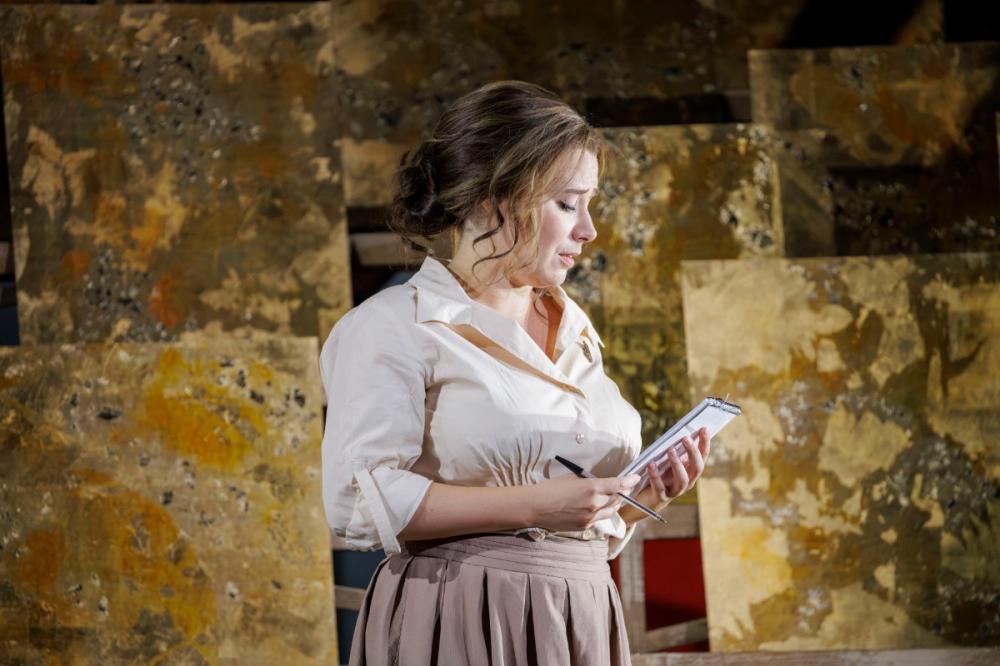
Verity Wingate as Tatyana. All photos by James Glossop
Why Tchaikovsky chose to call this opera Eugene Onegin rather than Tatyana we will never know. When we first meet Tatyana, she is young and vulnerable. She falls hopelessly in love with the deeply cynical Eugene Onegin and writes a letter where she pours out her heart to him. Onegin rejects her, a life-changing decision is thereby made, and the die is cast for a tragic love story to unfold. But, to me at least, this opera is more about the serenity and stoicism of Tatyana than the arrogance and stupidity of Onegin.
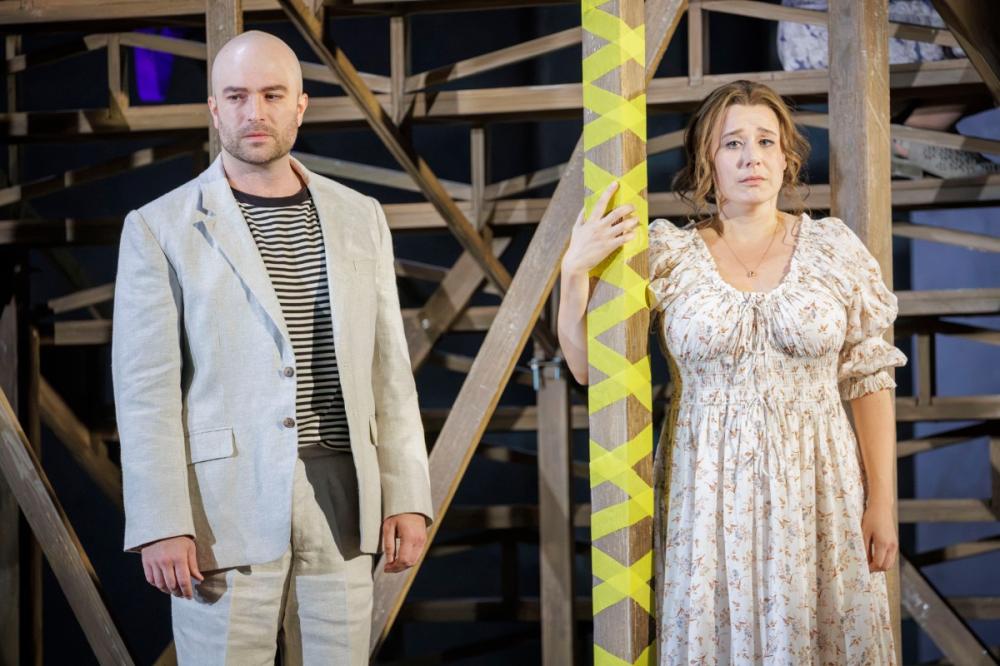
John Brancy as Eugene Onegin and Verity Wingate as Tatyana
Verity Wingate, Caspar Singh, Jingwen Cai, Joshua Bloom as Prince Gremin and Florian Panzieri as Triquet are all making their Opera North debuts in this production and all are successful.
Tenor Casper Singh has the looks of a writer quietly starving in his Parisian garret – if that's not too strong a hint. He combines shyness with occasional confidence and is so vulnerable when his friend, Onegin, offends him. His fresh tenor tones were perfect for the somewhat diffident poet, Lensky.
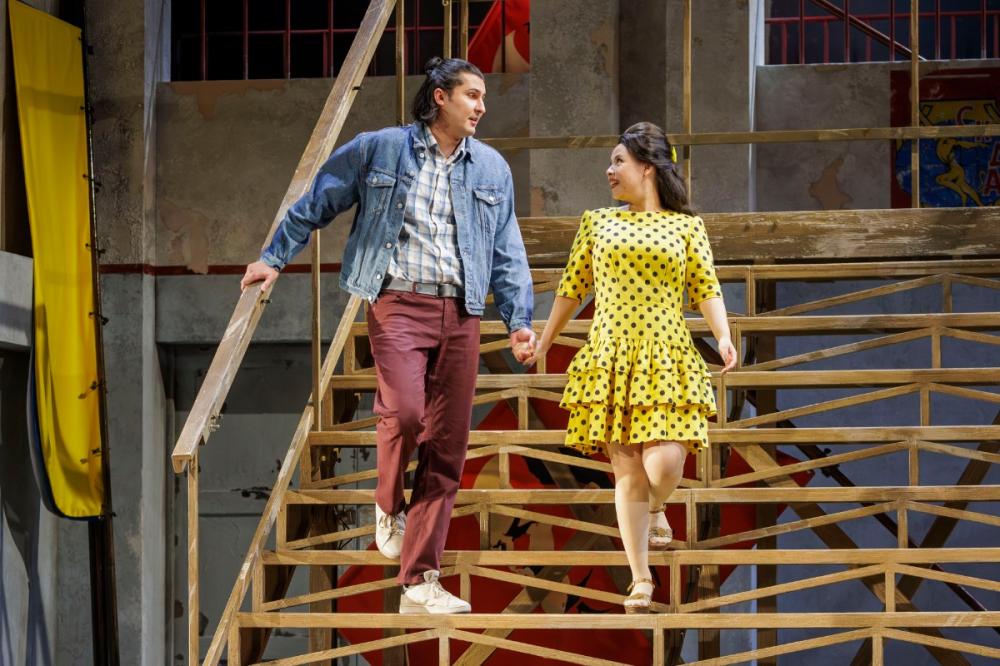
Caspar Singh as Lensky and Jingwen Cai as Olga
American John Brancy uses his daunting on-stage presence and a rich, resonant baritone voice to deliver a harrowing portrayal of our eponymous anti-hero, Eugene Onegin. The final scene between Onegin and Tatyana is as unmissable and heartbreaking as any you will find on the operatic stage, and both performers rose beautifully to the challenge.
Of course an opera by Tchaikovsky needs an excellent orchestra, and Garry Walker conducts a superb performance from both the musicians in the pit and the chorus above. There's a moment towards the end of act one (it only lasts for about 20 seconds), where Tatyana has completed and despatched her letter to Onegin and the morning sun is breaking through the windows of her factory. In this moment, the innocence and trepidation of Tatyana combine perfectly with the rich lyrical-scene style of Tchaikovsky to yield a sequence of great beauty. Thanks to the orchestra and the composer we can almost hear the sun rising and feel the anguish of young, inexperienced love.
What a wonderful production.
Eugine Onegin continues at:
Leeds Grand Theatre
Newcastle Theatre Royal
Lowry, Salford Quays
Theatre Royal, Nottingham
Total running time approx. 3 hours 10 minutes
Sung in Russian with English subtitles
More details can be found here.
Also by Richard Trinder...
Mahogany Opera And Their Ecstasy Of The VirtuesBepiColombo Begins Its Arrival At MercuryNorthern Ballet's Gentleman JackWhat Will Roman Do For Us?The Sound Of An Appreciative AudienceThe shortened address for this article is: newspub.uk/32194