



search
date/time

Sat, 10:00PM
few clouds
10.9°C
SW 5mph
few clouds
10.9°C
SW 5mph
 | Sunrise | 6:12AM |
| Sunset | 5:38PM |  |

Andrew Palmer
Group Editor
P.ublished 3rd October 2026
arts
Classical Music: Requiem Da Camera, For St Cecilia & In Terra Pax
Finzi grafted afresh – and Trinity's new era bears glorious fruit
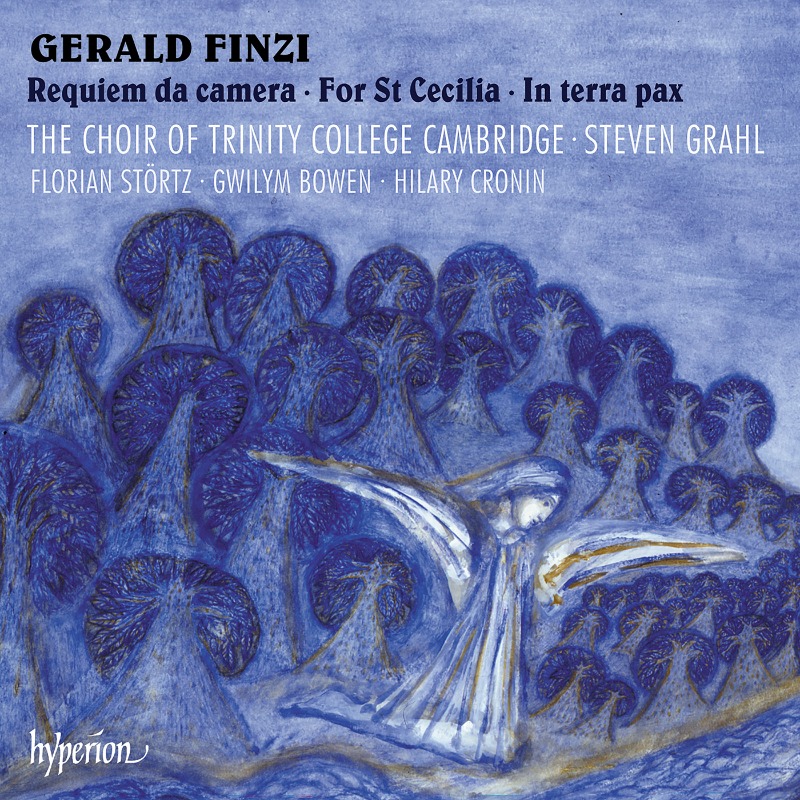
For St Cecilia. Ceremonial Ode, Op 30; In terra pax, Op 39 (1954, rescored 1956, transcr. organ by Robert Gower); Requiem da camera (1923-1934, revised 1930s, transcr. organ by Francis Jackson).
Hilary Cronin (soprano); Gwilym Bowen (tenor); Florian Störtz (bass-baritone)
Augustine Cox, Thomas Simpson (organ)
The Choir of Trinity College, Cambridge. Director Steven Grahl
Recorded in the Temple Church, London.
Hyperion CDA68487
https://www.hyperion-records.co.uk/
Finzi wrote For St Cecilia in 1947, setting Edmund Blunden's ode to the patron saint of music for tenor soloist and massed orchestral and choral forces. Robert Gower's organ arrangement loses none of its festive swagger. Recorded in the Temple Church, London, the instrument blazes with colour, and Thomas Simpson deploys it sagaciously, nowhere more so than in "Wherefore we bid you to the full concent", where the reeds ring out and the pedals lay down a floor of granite. Yet the organ never shoulders the singers aside; it remains the perfect cushion for the choir to lean into. Gwilym Bowen is an ideal soloist. Every word lands, the voice has a lovely ring to it, and he sings with such ease that one forgets one is listening to technique at all.
In terra pax, Finzi's Christmas cantata, draws on Robert Bridges and on the composer's memories of Chosen Hill in Gloucestershire, where the bells drifted across the frosty Severn Vale. Gower has again transcribed the orchestral parts for organ, and there are already recordings with full orchestra and with strings and harp. Does a third way work? Emphatically yes, and choirs would do well to snap this version up. Augustine Cox's accompaniments are delicious, Florian Störtz brings a warm, beautifully rounded baritone to the narrative, and Hilary Cronin's soprano shines like starlight over the hill. The balance between choir and soloists is superbly judged, and the words come across with crystal clarity throughout.
The Requiem da camera has had a more chequered life. As Francis Pott explains in his ever-illuminating booklet notes, it was pieced together piecemeal through the 1920s, and Finzi lived to hear just the Prelude in performance. What we hear is a hybrid: Francis Jackson's organ transcription, made some years ago, now dovetailed with the orchestral completion Christian Alexander undertook in 2013. It is the darkest and most private music on the disc, written in the shadow of the Great War, and the choir meets it with real sensitivity.
The Prelude sits naturally on the organ, as one might expect, but the heart of the work is the setting of Masefield's How still this quiet cornfield is tonight, which is simply gorgeous. The ensemble is terrific, and the unaccompanied passages lay bare the glory of this choir's sound, drawing the listener deep into words and music alike. In the final section, Hilary Cronin's voice rises from the choral texture to divine effect. Throughout, the organ registrations add to the charm, and nothing is overcooked; everything is polished, but never varnished.
Trinity's last all-Finzi album, in 2019, won glowing notices from Gramophone. I suspect this one will be spoken of in the same breath. Finzi was forever haunted by how briefly joy and life endure, yet this is a recording that will last. An utter delight, and a heavenly harvest from the orchard.
Also by Andrew Palmer...
Classical Music: Franck Quintet Enescu OctetClassical Music: Granville Bantock Orchestral WorksClassical Music: Ralph Vaughan Williams From Ursula, With LoveLandsec Swoops For Metrocentre In £516m DealBusiness Leaders Tell The Chancellor: Now Show US The MoneyThe shortened address for this article is: newspub.uk/32152