



search
date/time

Sun, 1:00AM
broken clouds
13.8°C
WSW 6mph
broken clouds
13.8°C
WSW 6mph
 | Sunrise | 4:15AM |
| Sunset | 8:10PM |  |
P.ublished 1st August 2026
lifestyle
Understanding Skin Cancer… What To Look Out For This Summer
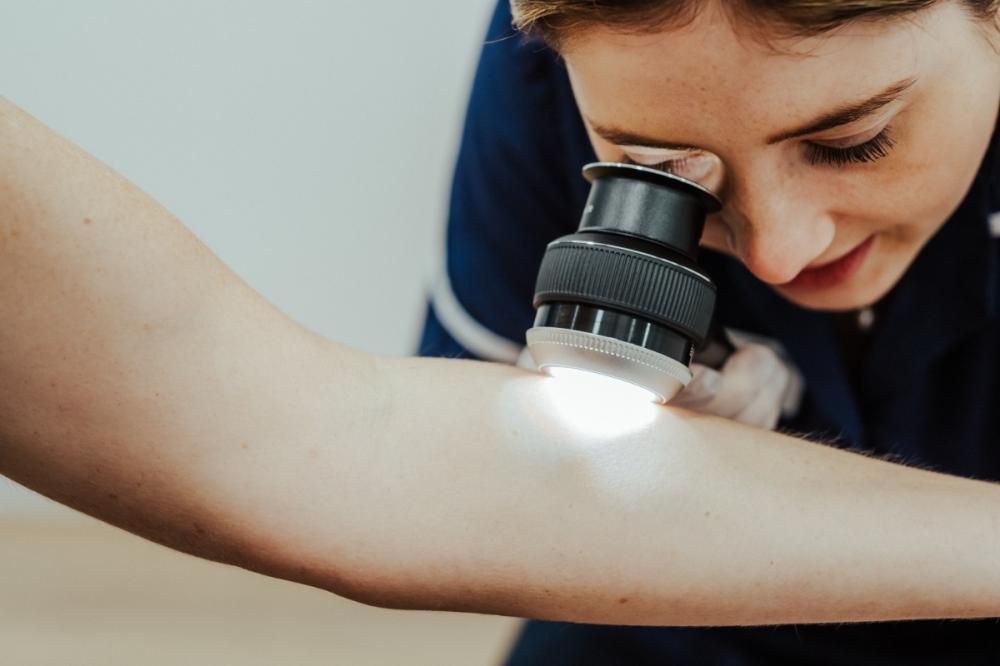
Photo: The Mole Clinic
Skin cancer is one of the most common cancers in the UK, and rates have been rising in recent years. According to Cancer Research UK, melanoma cases are expected to continue increasing in the coming decades, with around 26,500 new cases annually projected by 2038–2040.
While those figures can feel worrying, there is an important reassurance from experts at The Mole Clinic: when skin cancer is detected early, it is highly treatable. Awareness and early action make a real difference.
Dr Tim Cunliffe, Medical Director at The Mole Clinic shares what everyone should know as the holiday season begins.
Q: Why is skin cancer becoming such a growing concern?
Skin cancer is one of the most common and preventable cancers, yet cases continue to rise with the number of new melanoma skin cancer cases diagnosed in a year now above 20,000 for the first time in the UK.
A common misconception is that a tan is healthy, when in fact it signals skin damage from UV radiation. And it’s not just holidays that matter: UV exposure builds up over time through everyday activities like walking, gardening, outdoor exercise or working outside. Even on cloudy days, up to 70% of UV rays can penetrate through cloud cover.
Around 87% of melanoma cases are linked to UV exposure, including sunbeds, so protecting your skin should be part of your daily routine - at home as well as abroad.
Q: What exactly is melanoma?
Melanoma is the most serious form of skin cancer. It develops in melanocytes, the cells that produce pigment in the skin, and can appear anywhere on the body.
Unlike other skin cancers, melanoma can spread quickly if not caught early. Risk factors include excessive UV exposure, a history of sunburn, fair skin, a large number of moles, and a family history.
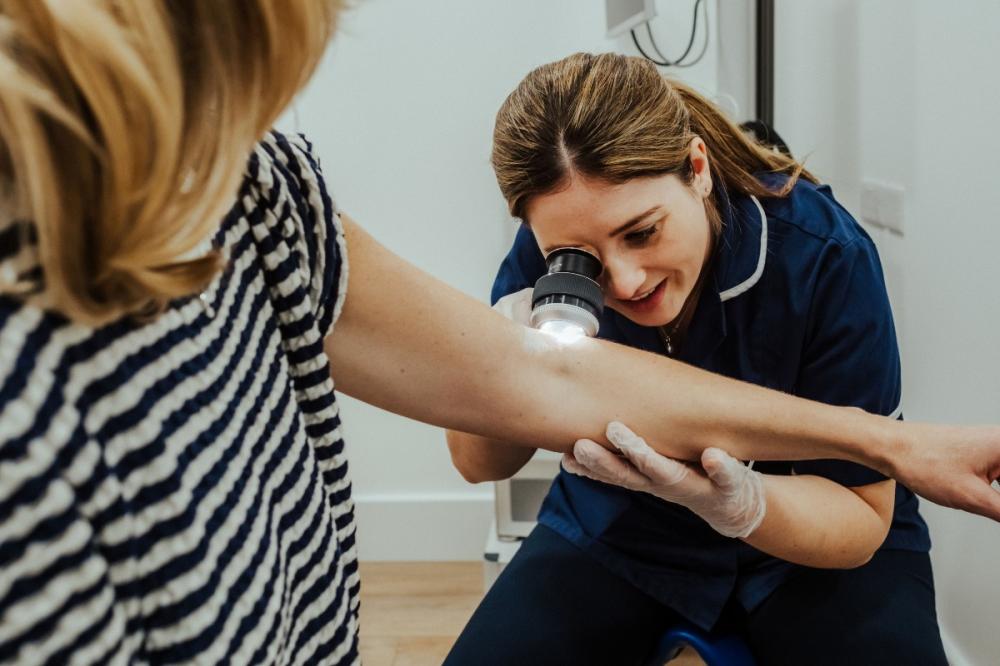
Photo: The Mole Clinic
One of the most effective self-assessment tools for detecting melanoma is the ABCDE rule:
A – Asymmetry: One half of the mole or lesion does not match the other half.
B – Border: Edges are irregular, blurred, or poorly defined.
C – Colour: The colour may be a single colour that differs from your other moles, or two or more colours or shades of colour.
D – Diameter: Larger than 6mm (about the size of a pencil eraser), although melanomas can be smaller, or a mole that is larger than your other moles.
E – Evolving: Any change in size, shape, or colour over time, or new symptoms like itching or bleeding.
Melanoma often appears as a new mark rather than an existing mole changing, so don’t ignore anything unfamiliar.
It can also appear as a firm lump, a dark streak under a nail, or a mark that simply looks different from your other moles. We call this the ‘ugly duckling’ sign - if something stands out, get it checked.
Q: Are there other signs of skin cancer people often miss?
Not all skin cancers are melanoma.
Basal cell carcinoma (BCC) often appears as a slow-growing pearly or shiny bump, a sore or patch that may bleed, crust and never fully heal. It grows slowly and rarely spreads to other parts of the body but can cause significant local damage if untreated.
Squamous cell carcinoma (SCC) tends to grow faster and may look like a scaly red patch, a tender lump or ulcer that doesn’t heal within four weeks.
These commonly appear on sun-exposed areas such as the face, scalp, ears and hands.
Q: How often should we check our skin?
A simple monthly self-check can be one of the most effective ways to spot changes early.
Try to check your whole body, not just areas that are exposed to the sun. The more familiar you become with your own skin, the easier it is to notice something new or unusual.
Many people also opt for a yearly professional skin check for reassurance and a more detailed assessment, especially if they have many or unusual moles, a personal or family history of skin cancer, fair skin that burns easily, frequent sunburn, high sun exposure, or previous sunbed use.
For those needing closer monitoring, full-body photography can help by providing a baseline so even subtle changes can be tracked over time.
Q: What should you do if you notice a change?
Try not to ‘wait and see’. If a change is noticed, it’s best to seek medical advice promptly.
When detected early, skin cancer is highly treatable - early action makes all the difference.
Q: What is the best way to protect your skin?
Small, consistent habits can make a big difference:
Use sunscreen with SPF 30+ and high UVA protection (4 or 5 stars).
Apply sunscreen liberally and reapply every two hours.
Covering up with clothing, hats, and sunglasses to shield the skin, particularly between 11am and 3pm when UV rays are at their peak.
Never use sunbeds.
Be extra cautious near water, sand, or snow, which reflect UV rays.
For more information on skin cancer screenings, or to find your nearest clinic, visit www.themoleclinic.co.uk.
The shortened address for this article is: newspub.uk/320di
Search Results