



search
date/time

Sun, 1:00AM
broken clouds
12.9°C
WSW 6mph
broken clouds
12.9°C
WSW 6mph
 | Sunrise | 4:15AM |
| Sunset | 8:10PM |  |

Andrew Liddle
Guest Writer
P.ublished 13th June 2026
arts
The Stations Of The Sun
Dr Andrew Liddle looks back at a seminal work by Professor Ronald Hutton
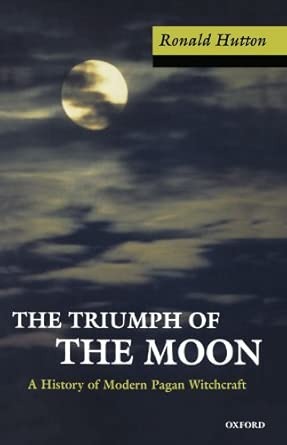
The Bristol University professor’s wider body of work - including The Triumph of the Moon, Pagan Britain, and The Witch: A History of Fear, from Ancient Times to the Present - questions popular narratives of antiquity by setting them against documentary evidence. In doing so, he has become particularly associated with dismantling the idea of unbroken pagan survivals in Britain’s seasonal customs. He suggests instead that such customs derive from ritual, folklore, and seasonal practice within the specific historical worlds that produced them. Far from being survivals of a deep-rooted folk memory, they are more often romantic reconstructions reinforced by centuries of antiquarian writing, Victorian folklore collection, and - more recently - the revivalist interpretations of neo-paganism.
To develop this argument, Hutton draws on parish records, civic accounts, liturgical calendars, legal documents, and early modern descriptions of custom. This evidential grounding leads him to a consistently sceptical stance toward the essentially nineteenth-century habit of interpreting mediaeval and early modern customs as survivals of prehistoric religion.
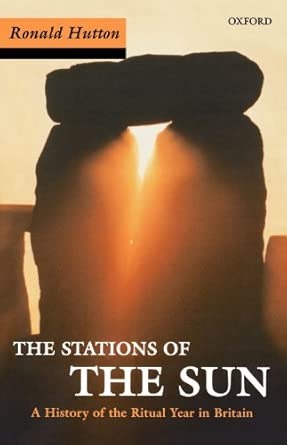
For Hutton, the English ritual year is not a fossilised inheritance but an evolving structure formed through overlapping influences. Christian liturgy provides the dominant framework, punctuating the calendar with feasts, fasts, and saints’ days, while local communities layer upon this structure their own regional customs, seasonal celebrations, and forms of social performance.
Later antiquarians and folklorists often gleefully reinterpreted these practices as survivals of an older pagan substratum. In reality, Hutton argues, what we observe is not a single continuous tradition but a palimpsest of historical accretions, each layer partially obscuring and reshaping what came before. Christmas exemplifies this, being understood better not as a pagan survival but as a deeply Christian feast that gradually absorbed domestic, social, and commercial forms of celebration. Its modern imagery, carols, decorated trees, and sentimental domesticity, is largely the product of eighteenth- and nineteenth-century romantic reinvention - much of it German in origin.
We often think of festivals such as May Day as survivals of archaic fertility rites and Hallowe’en as a continuation of the ancient Celtic festival of Samhain, which marked the end of the harvest and the beginning of the darker half of the year. Yet closer historical scrutiny reveals a more complex picture. Hallowe’en, though frequently associated with pre-Christian Celtic ritual, apparently emerged through the convergence of the Christian feasts of All Saints’ Day and All Souls’ Day, Irish folk customs, and subsequent cultural transformation. Its modern form was further shaped by migration to America and twentieth-century media, illustrating how traditions are continually reinterpreted and recast over time.
Guy Fawkes’ Night provides another revealing case. Unlike narratives of ancient continuity, its origins can be precisely located in the political and religious aftermath of the Gunpowder Plot of 1605. Over time, however, it evolved into a more diffuse mixture of political memory, communal festivity, and seasonal fire practice, incorporating older associations with burning the remnants of the harvest year. What began as Protestant commemoration became a broader cultural celebration of fire, noise, and social release, demonstrating how historically specific events can be absorbed into longer seasonal cycles.
May Day perfectly illustrates Hutton’s broader argument about a form of what might be called adaptive continuity. It is best understood as a recurring focal point for springtime celebration whose forms have varied significantly across time. What persists is not a fixed ritualistic structure but a recurring human inclination to mark seasonal transition through collective festivity, greenery, and symbolic renewal. Continuity lies less in what is done than in the fact that something of this kind has repeatedly been done.
Hutton does not dismiss their material outright but instead shows how it actively participated in constructing the idea of antiquity it claimed merely to record. This does not diminish the significance of ritual but rather relocates that significance within processes of change, interpretation, and reinvention.
What makes Hutton’s approach compelling is that it does not leave the seasonal year bereft of meaning, but instead enriches it with historical depth. The English ritual calendar becomes more fluid - and arguably more interesting - when seen not as a surviving relic of a lost world, but as an archival tapestry, as it were, of repeated cultural renewal. Each generation inherits not a fixed set of meanings, but a repertoire of forms that can be reinterpreted, reweighted, or entirely reimagined.
There is also a subtle philosophical implication running through his work. If traditions are not survivals but cultural fabrications, then cultural memory itself becomes an active process rather than a passive inheritance. What societies call ‘tradition’ is less a substance passed intact through time than a series of decisions about how the past should be staged in the present. The rituals of the year are not simply preserved but continually ‘updated’, something especially visible in modern adaptations and reinventions of older seasonal motifs - and the proliferation of urban myths.
Seen in this light, The Stations of the Sun did more than correct misconceptions about English festivals. It altered the way historical time itself is understood. The past is not a stable reservoir from which customs are drawn, but a shifting field continually reinterpreted by those who claim it. There is a particular intellectual satisfaction in recognising that the rhythms of the year we often imagine as inherited may, in fact, be among the most creative cultural constructions a society produces.
The poet Thomas Hardy lamented the rural world around him being emptied of older ritualistic certainties, its rhythms being snapped ‘like strings of broken lyres’. He was not wrong - but in our lifetime we are witnessing people attuning themselves to more mechanical and electronic forms of music.
Professor Ronald Hutton’s extensive lectures for Gresham College are available to view online. Here is the opportunity to see one of the country’s finest academics at work.
Also by Andrew Liddle...
From Alpine Roots To Global Stages: How Oesch’s Die Dritten Keep Tradition AliveWinterreise In The Ryedale Heatwave: Icy Solitude At The Height Of SummerA Voice To Make The Heart Ache And RejoiceCalendar Girls: The MusicalIn Praise Of German BeerThe shortened address for this article is: newspub.uk/31zqx
Search Results