



search
date/time

Sun, 7:00PM
light rain
16.1°C
W 16mph
light rain
16.1°C
W 16mph
 | Sunrise | 6:00AM |
| Sunset | 5:54PM |  |

Andrew Palmer
Group Editor
P.ublished 18th February 2023
nature
Powerful Murmurations In Ripon
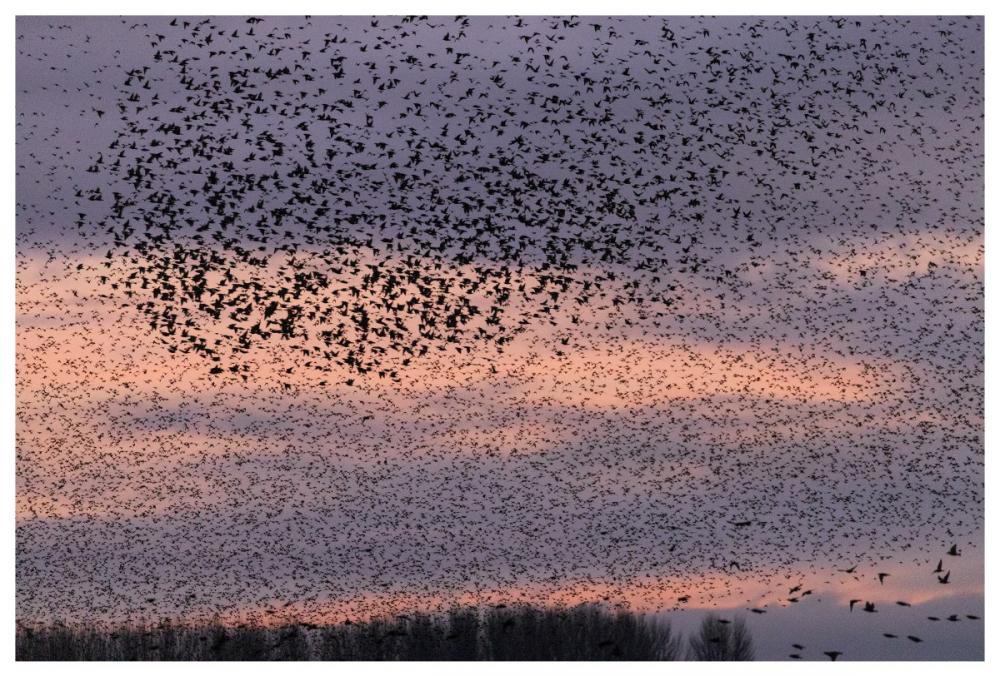
Murmuration Ripon City Wetlands - Clive Stones
I have parked up on a beautiful late February afternoon. It is mild, the sun is creating a dramatic kaleidoscope of reds and oranges across the fields in every direction, and, as I walk on reclaimed land sandwiched between the mighty River Ure and the Ripon Canal, I am eagerly anticipating dusk. For it is then that a spectacular and vivid aerial display of commotion on theatrical proportions will happen.
.jpg)
Murmuration Ripon City Wetlands - Clive Stones
But that’s not the only reason, and, yes, it is a cliché, but James is eager to show off Ripon’s well-kept secret a hidden gem, that it is a mere stone’s throw from my front door.
James tells me the site, a haven for wildlife, was previously a working quarry.
“It was in 2003, when Aggregate Industries bought the quarrying rights from Brown and Potter and worked with Yorkshire Wildlife Trust and Middlemarch Environmental to design the habitat.
“There are between 55 and 70 species you can spot in the winter months, the most common being ducks, especially the tufted variety, stonechats, warblers and occasionally pintails.
“As we approach the spring the reedbeds will come alive with the warblers particularly the sedge and reed varieties. Visitors will also see sand martins flying overhead looking for insects and large numbers of wildfowl as well as avocets, little ringed plovers, shoveler ducks and bitterns, the secretive members of the heron family.”
As we walk around the peaceful wetlands, I can imagine poets, painters and composers being inspired; Vaughan Williams’ Lark for example soaring high above the landscape silhouetted against the cathedral, but for now we are waiting for the murmuration.
Scientists still don’t have the answers to why murmurations happen. James tells me they usually occur predominantly in winter months because birds don’t breed and therefore don’t have to sit on nests.
“It’s to do with safety in numbers. If there is a bird of prey it will try to single out a starling from the thousands that are swishing around and that is quite hard to do.
“Last year the numbers in the murmuration were lower and we saw a sparrow hawk or peregrine try and pick off a starling, but the murmuration would just open, and the bird of prey seemed to be swallowed up in the epicentre of the murmuration.
“Another reason is for warmth. The birds will drop into the reeds and if you were to come here first thing on a morning at first light, you would see steam coming off the reeds as the starlings wait before taking off all at once.”
But for obvious reasons do not stand underneath them!
James suggests getting to the Ripon City Wetlands half an hour before sunset to watch the dribs and drabs of starlings congregate before become a colossal susurrus.
Apparently, the starlings chatter to each other just as humans do, communicating where to roost and find food, the equivalent of us sharing notes.
Since the Ripon City Wetlands opened, the murmuration has attracted more and more starlings so much so, that the mini events at Staveley Wildlife Reserve have moved to Ripon.
The site was created by extracting approximately 130,000 tonnes of material which, James tells me, weighs the same as the Royal Navy’s two current Queen Elizabeth class aircraft carriers combined.
The nature reserve, once agricultural fields with little ecological value is now teeming with wildlife and acts as a essential water storage for the area from Ripon down to York, storing water in times of flood
Now managed by Yorkshire Wildlife Trust this is a haven of tranquillity, punctuated with birdsong every so often and rich in wildlife for everyone to enjoy.
If you would like to watch a murmuration at Ripon City Wetlands please do check Yorkshire Wildlife Trust’s website reserve page first for advice about accessing the reserve safely after dark. Murmurations like these are made possible by the hard work of Trust staff and volunteers to create wilder wetlands for wildlife, and your support is always appreciated. Find out more at www.ywt.org.uk.’It is one of many such sites across the county more information at www.ywt.org.uk.
Also by Andrew Palmer...
North Basks In 'Painted Lady Summer' – But Butterfly Experts Fear A Crash Next YearClassical Music: Bruch Violin Concerto No 1Classical Music: Neeme Järvi Conducts ShostakovichClassical Music: Mentor And Muse: Songs By Vaughan Williams And The Women Around HimClassical Music: KinThe shortened address for this article is: newspub.uk/31j9x