



search
date/time
Wed, 4:00AM
moderate rain
10.2°C
3mph
moderate rain
10.2°C
3mph
 | Sunrise | 6:19AM |
| Sunset | 5:28PM |  |
P.ublished 25th July 2026
nature
Highly Endangered Newts Hatched In A UK Zoo Have Been Released At A Secret Site In Catalonia
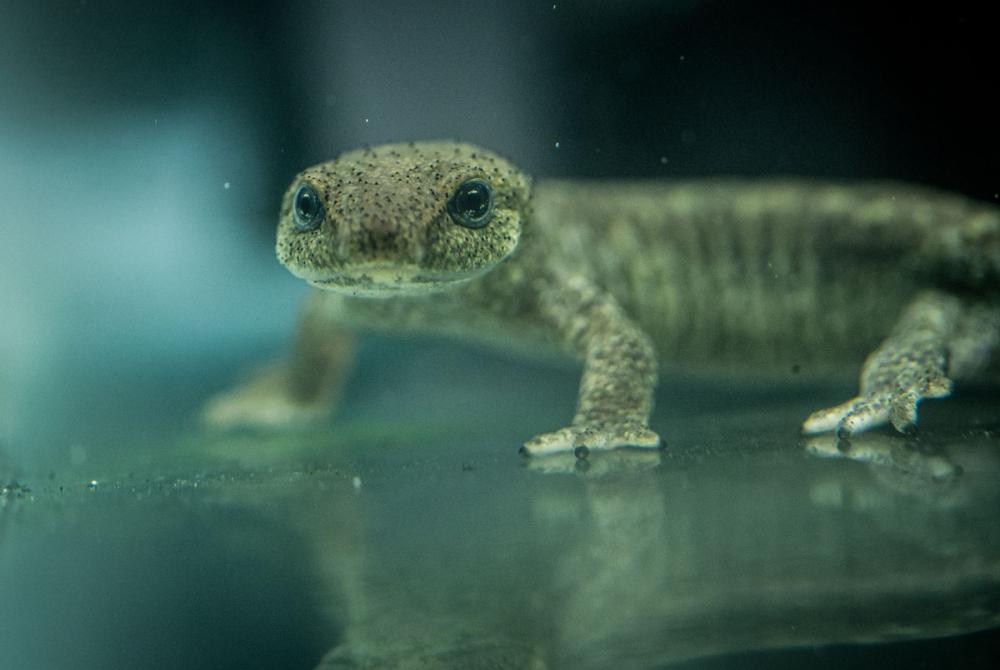
Highly endangered newts born in a UK zoo released at secret site
Photo: © Chester Zoo
Chester Zoo, the only UK organisation involved in the breeding programme, has just introduced 32 Montseny brook newts (Calotriton arnoldi arnoldi) to a mountainous habitat near Barcelona.
More than a hundred more are still living at Chester Zoo while they mature ready for follow-up releases.
Photo:©Chester Zoo
Montseny brook newts are chocolate brown, gold-speckled amphibians that grow to up to 10am in length - roughly the size of a pack of cards. They are critically endangered, according to the IUCN Red List, and around 1,000 remain in the wild.
The release site is being kept secret to protect the newts from disturbance and from a deadly fungal disease that can devastate amphibian populations.
The released newts have been given UV markers to track their movements and the success of the reintroductions.
.jpg)
Photo:©Chester Zoo
He said: "These newts are fascinating, and also quite cute. But they are extremely vulnerable. Their habitat is fragmented by roads, they are highly sensitive to water quality and they face the constant threat of illegal wildlife trade."
Despite their precarious situation, researchers have been encouraged by one unexpected finding - the newts' genetic diversity is surprisingly healthy for a species so close to the edge.
“Usually when numbers get this low, you'd expect genetic diversity to plummet. But research shows it's surprisingly good. That gave us a strong foundation for the project.”
.jpg)
Photo:©Chester Zoo
At Chester, 12 breeding pairs continue to live in specially designed breeding pods, where keepers carry out regular health checks under strict biosecurity protocols.
Ellie Bland, the zoo’s Ectotherms Keeper, oversees daily water checks, tank cleaning, headcounts and egg-checks.
She said: “The females evolved to lay eggs in fast-running water, so they are experts at putting them in tiny hidden crevices – it’s not always easy to find them.
“They’re quite quirky. They are visual hunters that target aquatic worms and insects – I pipette feed them and they are very reactive to movement – so we have these huge eyes watching us while we work.”
Mrs Bland said seeing the newts enter the river after months of careful monitoring in the zoo was a profound moment.
She said: “It’s awesome seeing them swim free. Moments like this are why I wanted to work in a zoo in the first place.”
Chester Zoo worked alongside amphibian experts at the Catalan government, Barcelona Zoo Pont de Suert Wildlife Center, School of Nature of Parets del Vallès, Parc Natural i Reserva de la Biosfera del Montseny and Centre de Recuperació de Fauna Salvatge de Torreferrussa as part of an official Montseny Brook Newt Recovery Plan.
Montseny brook newts live in a restricted area in the Catalonian massif
Their location is kept secret to protect the biosecurity of their small but vital freshwater habitat and to prevent them being taken for the illegal wildlife trade
Biosecurity measures are needed to protect the newts from chytrid, a fungal disease that has been linked to serious declines in multiple amphibian species
Adults grow to about 10cm long and take five years to reach sexual maturity
They lay white eggs which may be photosensitive, meaning exposure to light could affect their fertility and the development of larvae
Female Montseny brook newts have evolved an unusually pointy cloaca (the passage through which they poop and lay eggs) so they can hide their eggs in hidden crags and keep them safe
Newts undergo metamorphosis, changing from larvae with external gills to mature adults with internal lungs. Unlike when tadpoles turn into frogs, newts retain their tails
Montseny brook newts are a primarily aquatic species, but they are known to explore dry environments – including climbing to the top of their tanks to hang out above the water line
The first newts to come to Chester Zoo arrived in 2017
The shortened address for this article is: newspub.uk/3208u