


search
date/time

Sat, 10:00AM
few clouds
5.1°C
S 7mph
few clouds
5.1°C
S 7mph
 | Sunrise | 6:53AM |
| Sunset | 4:47PM |  |

Sharon Cain
Lifestyle & Travel Editor
P.ublished 24th October 2026
travel
Fight For Survival On The World's Deadliest River Crossing
The Great Wildebeest Migration is stresssful and dangerous for the herd Images and videos by Steve Hare
One of nature’s greatest phenomenon’s, the migration across the Serengeti and Masai Mara eco-system entails a staggering 1.5 million wildebeest, 300,000 zebras, and 200,000 gazelles relentlessly on the move in search of seasonal rains and sustenance.
Fraught with peril along the way, their journey becomes even more dangerous at the crucial Mara river crossing from Northern Tanzania to Kenya where predators lie in wait.
Lifestyle and Travel Editor, Sharon Cain, and series Photographer, Steve Hare, were beyond fortunate to experience the epic event.
They also witnessed hair raising moments when mayhem erupted after the beasts crossed the river and charged off in different directions, creating chaos.
Riverbanks Fraught With Danger
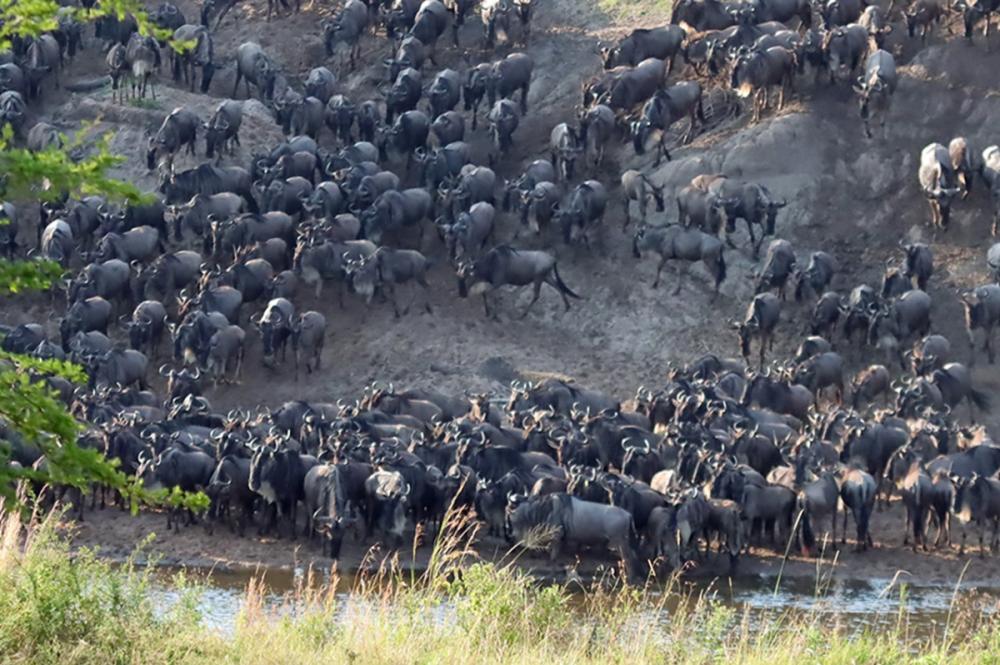
Tension is palpable as the herd gathers on the riverbank
I was beyond tired on arriving at the Mara river in Northern Tanzania after a 15,000 mile journey by jeep, boat, and plane across seven African countries. I hoped against hope the spectacle would happen over the next one and a half days before we had to leave.
If I was shattered, how exhausted would the two million-strong herd of wildebeest, zebras and gazelles be after their laborious trek across two thousand kilometres in a continual loop - and all in the name of survival.
With no respite from attackers along the arduous route, the volume of predators is amplified in and around the river with crocodiles, big cats, hyenas, and vultures.
Agonising Wait
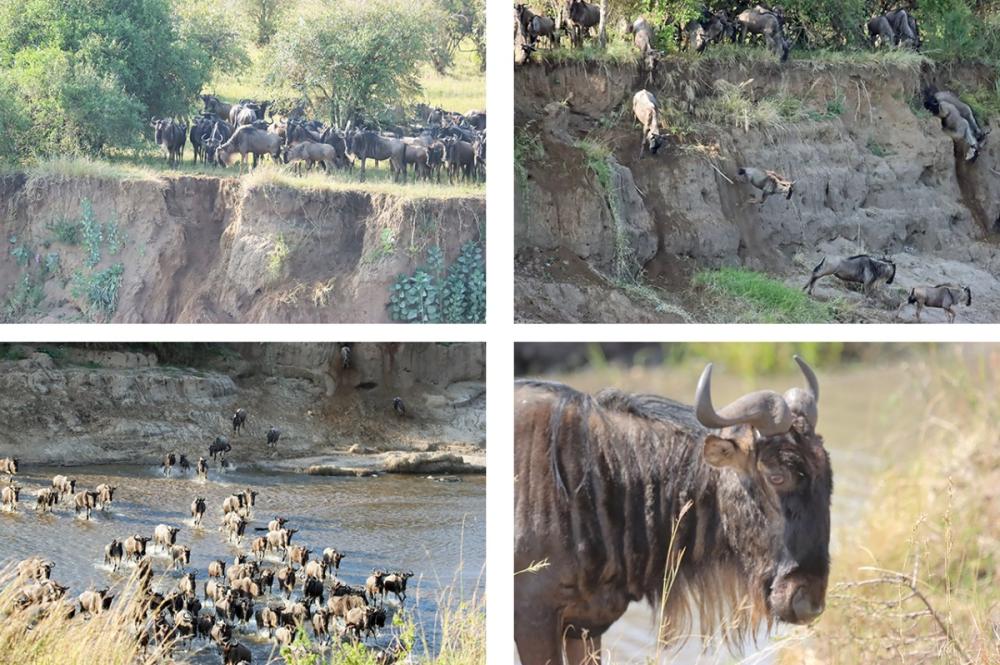
Drop off point: are predators lying in wait?
Sleepless with anticipation, at 6.30am next morning we were back, checking out the multiple crossing points with our guide Alfonso.
While herds can assemble at the bank daily during the migration season (April to October), whether they cross depends upon factors such as water levels, fear of being attacked, and herd pressure.
This means visitors can - and do (we spoke to some at the lodge) - wait for days. With just 12 hours before sunset, we did not have this luxury.
I will never forget the timing of events that pivotal morning. At 7.58am, the sight of hundreds of wildebeest gathering on the opposite riverbank set my heart pounding wildly.
Pacing nervously and calling to each other, their numbers were swelling to thousands. Some looked tentatively down the bank to see what lurked below.
Would they pull back and regroup - or would they jump?
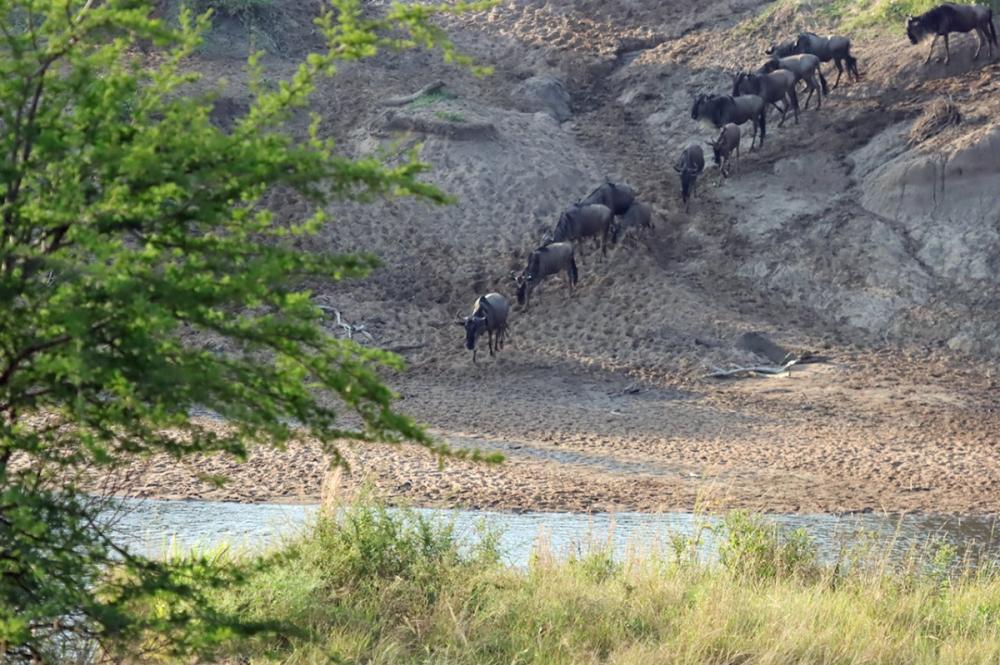
Navigating the descent down the bank
When anticipation among the herd and tourists reached fever pitch, the matriarch had reached the bottom of the bank.
This was the signal to go, setting off a chain reaction that was out of this world.
Momentous Crossing
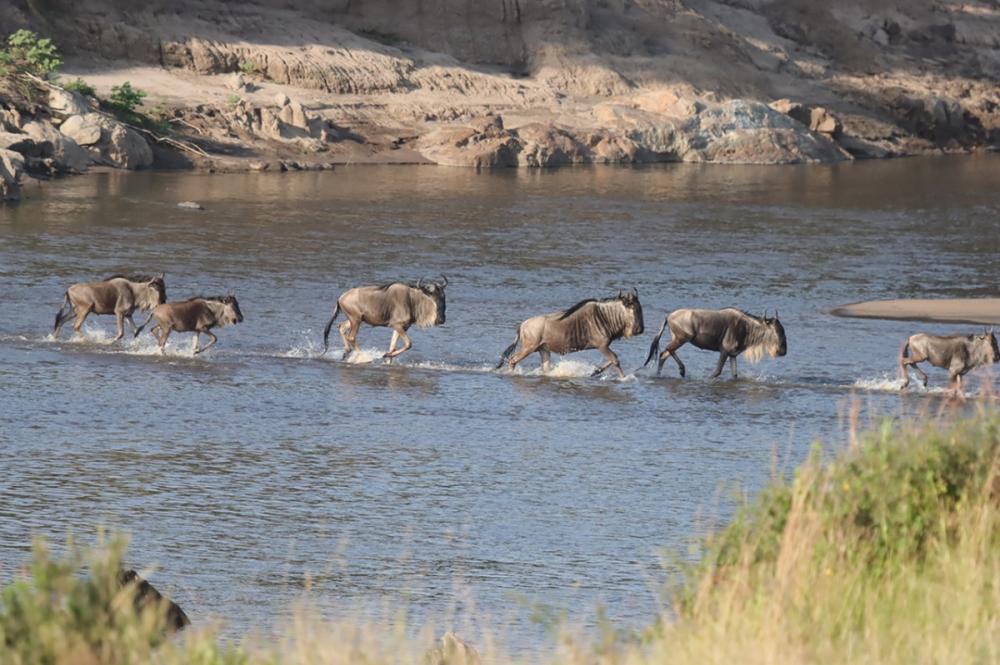
The hazards: crocodiles are more common in shallow waters
Provoking an overwhelming emotional response, I burst into floods of tears.
Tragically twenty per cent of the annual migration herd do not survive the journey. I prayed that those on today’s crossing would not become prey to predators or be killed in the stampede.
I was particularly anxious for the welfare of the cubs, which make up one third of the herd. Born across January to March annaully, they are particularly vulnerable, with some just weeks old when the migration starts in April.
The new born are constantly targeted by lions, cheetahs, hyenas and leopards along the route. They are especially susceptible to stampedes and drowning - two per cent are devoured by crocodiles on every journey.
When Chaos and Confusion Erupts
Out of control: the stampede out of kilter
They include keeping a safe distance from the bank, from each other’s vehicles - and to avoid blocking crossing points.
Earlier when waiting, our guide had asked a couple of jeep drivers, who were parked too close to us, to stick to the required distances. Egged on by their passengers to get closer to the bank, they ignored him.
I quickly learnt that nothing is predictable about this event when the herd - often called a ‘confusion’ due to the disorderly nature of the ritual - suddenly broke rank.
Sustaining their furious pace, they started to gallop in different directions, including ours, which was utterly terrifying.
Hundreds of disoriented animals belted up the bank on our side of the river and towards us before veering round the back of jeeps and up a path behind.
Still shaking, I was later relieved to see the herd had somehow safely regrouped, denoting a successful mission.
Safety In Numbers: Migration Partners
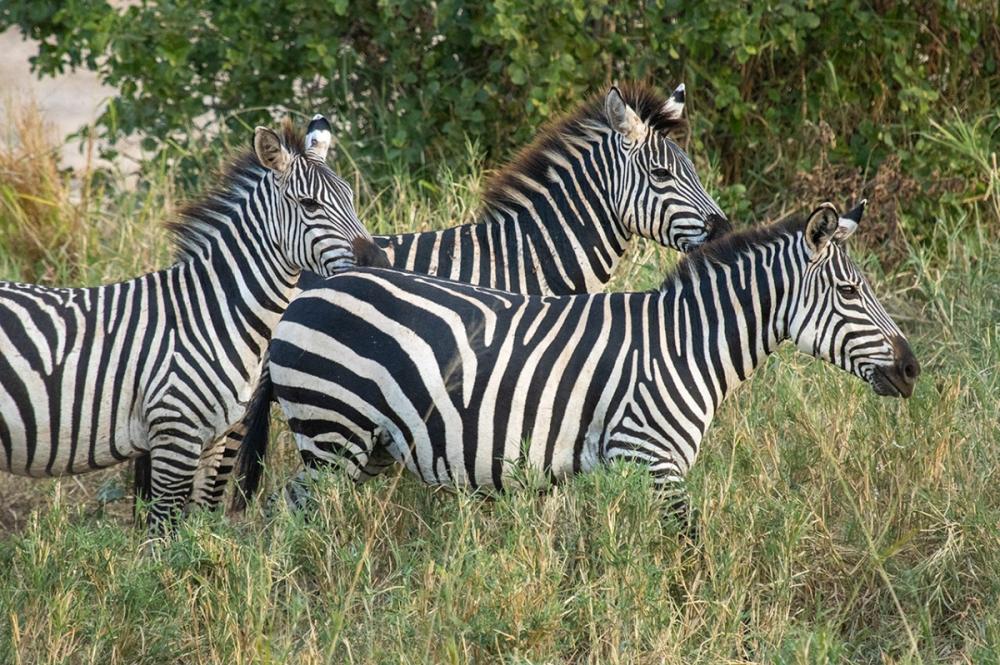
Side by side: zebras are ideal companions
Their robust digestive systems allow them to consume the tall, course top layers of grass, leaving the shorter, and more nutrient-loaded grass for wildebeests and fellow herbivores, to suck.
With excellent vision, zebras spot danger early, complementing the wildebeests’ strong hearing and sense of smell – all of which help to detect harmful prowlers.
Around ten per cent of the herd, also called a 'dazzle' due to their bright strips distracting predators, do not survive the testing journey.
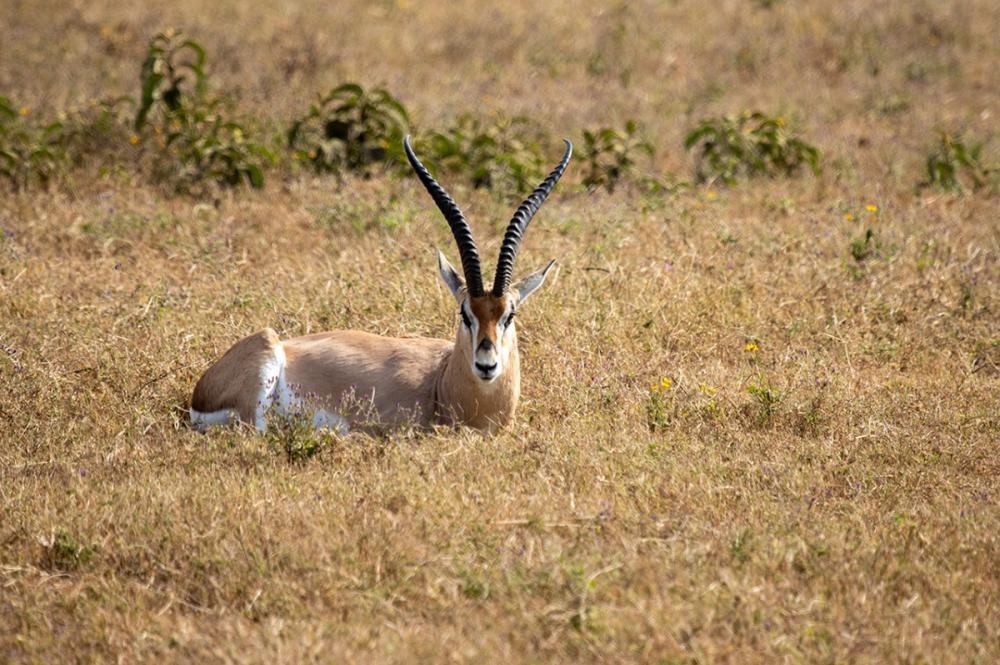
Gazelles also help to ward off predators on the journey
Able to source the best shoots, they are last in the feeding sequence after zebras and wildebeest, devouring herbs near ground level that would otherwise be buried.
Expansive Serengeti Plains
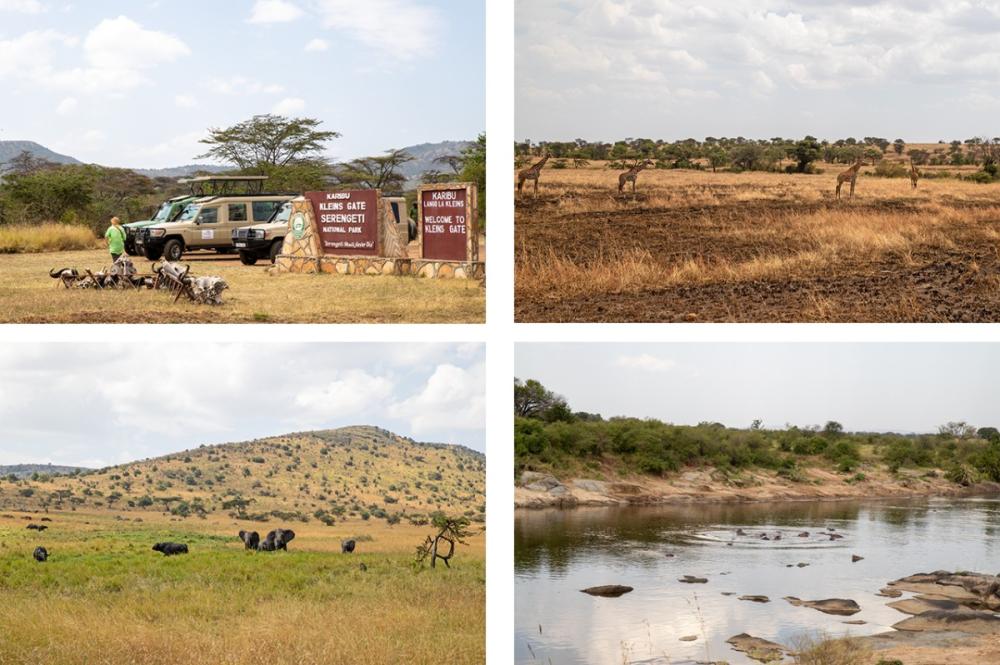
The Serengeti plains: iconic grasslands stretching 12,000 square miles
Earning UNESCO status five decades after setting up as a game reserve in 1930 to protect wildlife from hunters, it borders the Masai Mara Nature Reserve in Kenya – the migration’s destination.
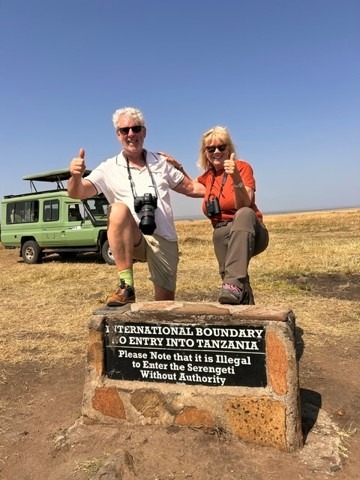
Driving to the Tanzanian/Kenyan border after the crossing, it was wondderful to see the herd calmly resting, no doubt relieved they had lived to see another day.
Pride of Serengeti
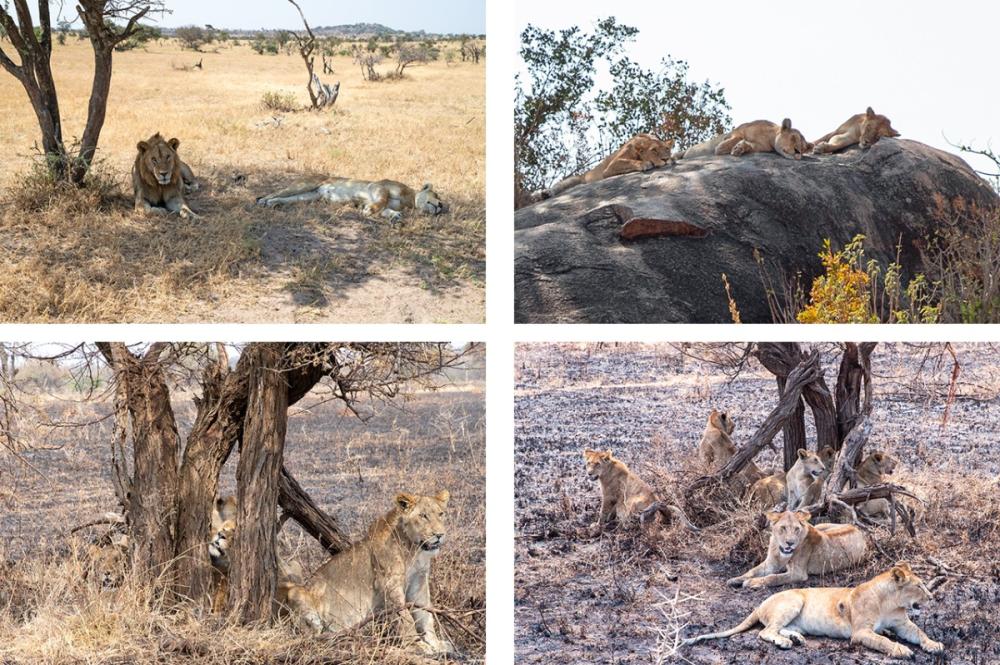
Lions are key to sustaining the balance of the Serengeti ecosystem
Around 3,000 lions thrive and survive in the Serengeti ecosystem, living in prides of between 15-20. Hunting is mainly the domain of the females with wildebeest, zebras, and gazelle the primary food source. The males defend their cubs and territory from intruders.
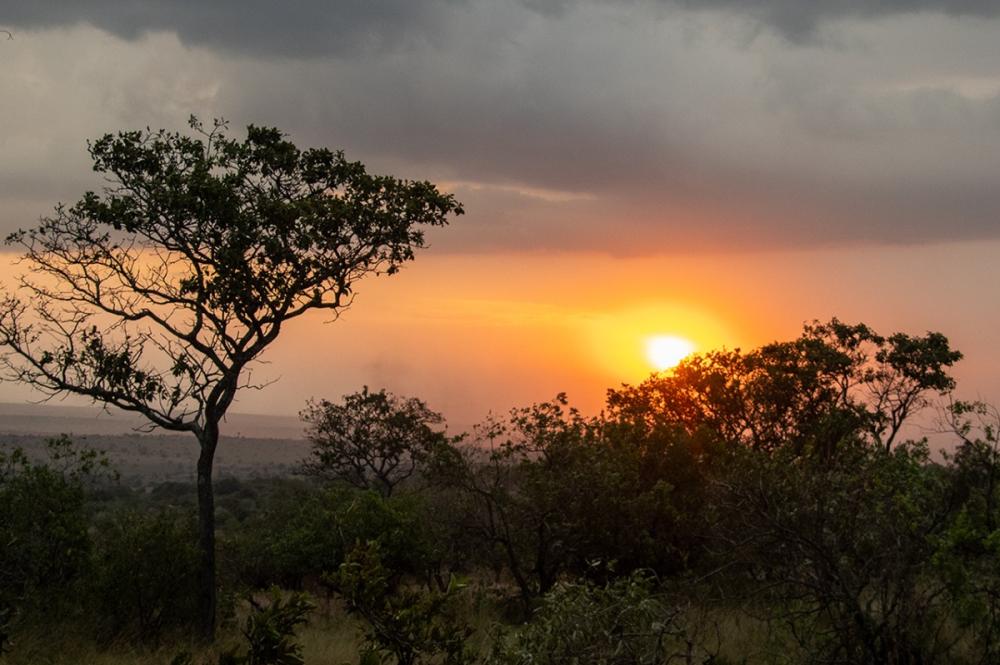
Dusk descends but noctural animals such as leopards, lions and hyenas hunt at night.
The Migration In Motion : Video Below
I had been privy to the spectacle of the largest land movement of animals on the planet.
I had yearned witness the crossing my entire life. Three months later I still pinch myself, incredulous and grateful that it happened within a short window of opportunity.
The intense experience exemplified courage and resilience in a world so far removed from from our own where survival of the fittest prevails - and nothing is taken for granted.
Great Migration - Wikipedia
Tours & Safaris - Ranger Safaris Ltd Tanzania
The Great Wildebeest Migration takes place between April and October, with peak activity across August and September.
The documentary series Trek: Spy on the Wildebeest narrated by David Attenborough is available on Discovery and Amazon.
Your can read more on Sharon and Steve's African adventures at Victoria Falls Yorkshire Times and The Chobe River and Tarangire National Park across the Yorkshire Times series
Also by Sharon Cain...
Seismic Change, Despair, Survival: Our Friends In The NorthVenice And Motorhoming? You've Got To Be Joking!Reflections On A Sensational African SafariThe Anastasia File: Imperialism, Evil, Fact And FictionMotorhoming Switzerland: Mingling With The Rich In St MoritzThe shortened address for this article is: newspub.uk/321e2