



search
date/time

Sat, 10:00PM
scattered clouds
14.6°C
W 14mph
scattered clouds
14.6°C
W 14mph
 | Sunrise | 3:27AM |
| Sunset | 8:45PM |  |

Andrew Palmer
Group Editor
P.ublished 13th June 2026
arts
Review
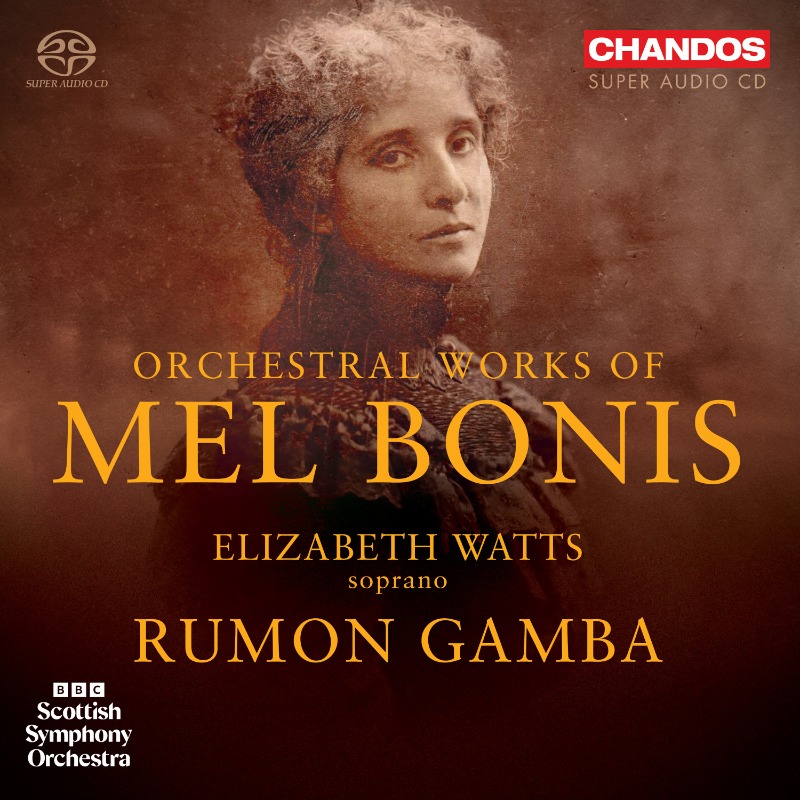
Classical Music: Mel Bonis Orchestral Music
A composer of real charm emerges from the shadows.
Trois Femmes de légende; Suite en forme de valses; Two Movements from ‘Suite orientale’, Op. 48/2; Le Chat sur le toit, Op. 93/2*; Trois Danses; Noël de la vierge Marie, Op. 54/2*; Danse sacrée, Op. 37/3; Les Gitanos, Op. 15/3.
Elizabeth Watts* soprano
BBC Scottish Symphony Orchestra
Rumon Gamba
Chandos CHSA 5381
chandos.net
Bonis devoted herself to domestic life until a reunion with Hettich in the 1890s rekindled her creative ambitions. She went on to compose well over three hundred works—pieces for solo piano, chamber music, and over forty melodies—but a combination of natural reticence and the persistent prejudices of a male-dominated musical world conspired to push her music into obscurity after the First World War. She died in 1937, having composed to the last despite years of debilitating arthritis. This well-filled Chandos disc draws on two decades of her orchestral output, from 1891 to 1912, and makes a persuasive case for a composer overdue for reassessment.
Rumon Gamba and the BBC Scottish Symphony Orchestra open with Femmes de légende, originally composed for piano, and they bring it off with real delicacy. The suite's most substantial movement, Le Songe de Cléopâtre, carries a distinctly Tchaikovskian warmth, and Gamba shapes its broad paragraphs convincingly. The Trois Danses and Danse sacrée demonstrate Bonis's assured command of orchestration: the woodwind writing in the Danse sacrée is quite lovely, and in the Trois Danses—opening with a buoyant Bourrée, moving through a pavane in which the woodwinds again excel, and closing with a dignified sarabande—the instrumental balance is consistently well judged.
Elizabeth Watts is the soprano soloist in two songs for voice and orchestra. In Le Chat sur le toit, a setting of a poem by Robert du Costal depicting a cat escaping across a rooftop, she is engaging and characterful, but it is Noël de la Vierge Marie that lingers in the memory, Watts's luminous tone blending with the SSO strings in music of quiet radiance. Her diction is immaculate throughout, and she brings a natural responsiveness to both texts.
The disc concludes with Les Gitanos, the earliest work here. Originally subtitled Grande Valse espagnole and dedicated to Bonis's father, it won first prize in a competition for a new waltz organised by the magazine Piano Soleil in 1891 in its original solo piano form. As Nigel Simeone notes in his excellent and informative booklet essay, the Spanish flavour is conjured in a manner that owes something to Chabrier—all castanets and rhythmic swagger—and the orchestral arrangement carries it off with spirit.
Throughout, the recorded balance is exemplary. A worthwhile and well-presented introduction to a composer of real, if modest, gifts.