



search
date/time

Thu, 10:00PM
few clouds
23.2°C
W 3mph
few clouds
23.2°C
W 3mph
 | Sunrise | 3:39AM |
| Sunset | 8:43PM |  |

Andrew Liddle
Guest Writer
P.ublished 23rd May 2026
arts
Catching The Boogie Disease: Doctor Ross And The One-Man Blues Cure
Dr Andrew Liddle considers the impact of a forgotten figure in the history of popular music
.jpg)
His 1951 recording The Boogie Disease remains one of the great hypnotic blues-boogie sides of the era, with its relentless rhythm, stabbing harmonica, and almost trance-like sense of propulsion. Rooted in Delta blues but already straining toward something harder and more urgent, the record is rock ’n’ roll before the term had properly settled into the culture. Its companion piece, Jukebox Boogie, carried the same kinetic charge. Both tracks were later re-recorded, in 1954, for white audiences at Sam Phillips’ legendary Sun Studio, in Memphis, months before Elvis Presley, Scotty Moore and Bill Black arrived there to record Milkcow Blues and You’re a Heartbreaker - and change the course of musical history.
Born Charles Isaiah Ross, on 21 October 1925, in Tunica, Mississippi, deep in the Delta, he was one of eleven children. His father, Jake Ross, played harmonica and introduced him to the instrument at an early age. Ross also clearly absorbed the influence of Sonny Boy Williamson I, particularly in the sharp attack and rhythmic phrasing that later became central to his own style.
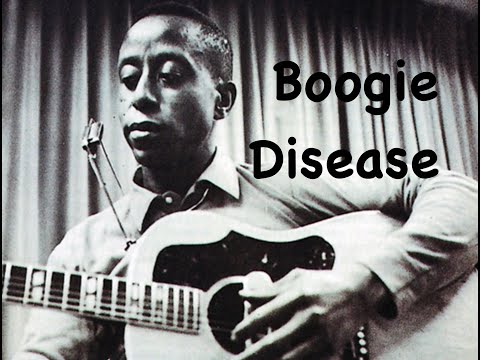
Like many Delta musicians of his generation, Ross learned music in informal settings, house parties, local gatherings, juke joints, where blues, gospel, field hollers and country music overlapped naturally. That mixture stayed with him throughout his career. Even at his most electrified and electrifying traces of older Southern traditions remained audible beneath the driving boogie rhythms.
Ross reportedly wanted to become a professional musician from the age of nine. His ambitions were interrupted by military service during and after the Second World War, including time in the Pacific between 1944 and the early 1950s. Yet the Army must also have broadened his musical horizons and given him a taste of life beyond the Delta. Exposure to travelling performers and military entertainment circuits helped lay the foundations of the one-man-band style he would later perfect, creating maximum sound and rhythm with minimal resources.
.jpg)
Ross became a familiar presence on Southern radio, appearing notably on KFFA in Helena, Arkansas, on the King Biscuit Time, another legend in musical history, which featured live performances by Sonny Boy Williamson II and Robert Lockwood Jr. Broadcast daily across the Mississippi Delta, it became hugely influential, inspiring blues legends such as B.B. King, James Cotton, and Ike Turner. The show helped popularise Delta blues and remains one of America’s longest-running radio programmes. Ross also appeared on WDIA in Memphis, perhaps the most influential African-American radio station in the States, in promoting blues and rhythm-and-blues performers.
The recordings Ross made during this period are fascinating because they capture him before the one-man-band persona fully crystallised. On many of these sessions he still worked with accompanying musicians rather than operating entirely alone. Yet the essential elements were already present: the heavy rhythmic drive, the aggressive harmonica attack, and the sense that the music was being pushed forward by pure momentum rather than conventional melodic development.
.jpg)
Early recordings such as Chicago Breakdown, Memphis Boogie, Downtown Boogie and his biggest hit, Boogie Disease, reveal just how fully formed this approach already was. The sound is thick, distorted and unexpectedly powerful for the period, with amplifier overload adding grit and density to the recordings. In some sessions washboard accompaniment, probably supplied by Reuben Martin, deepened the juke-joint atmosphere and reinforced the music’s relentless groove.
At the same time, Ross remained deeply connected to older blues traditions. Songs such as Going to the River and Good Thing Blues clearly draw on earlier figures including Jimmie Rodgers, the ‘Blue Yodeller’, and Blind Lemon Jefferson. Yet Ross never sounds derivative. Instead, he is recasting familiar melodic fragments into something more percussive and insistent. It cannot be overstated that his music depended less on harmonic sophistication than on repetition, rhythm and physical momentum, qualities that would soon become central to rock ’n’ roll.
As the 1950s progressed, Ross increasingly refined his one-man-band setup, combining guitar, harmonica, vocals and foot-operated percussion into a single self-contained performance system. The approach was partly a musical preference and partly one of economics. Even when accompanied by others, however, Ross’s rhythmic insistence dominated the performance.
Many of his songs were built from traditional blues and folk material. Shake ’Em On Down, Down South Blues, Going Back Down South and Polly Put Your Kettle On all demonstrate his habit of reworking existing structures rather than composing wholly new material. But originality in blues has never depended solely on invention. Ross’s gift lay in transformation, in taking familiar fragments and driving them so hard that they became something immediate and unmistakably his own.
.jpg)
His big breakthrough came with the 1965 album Call the Doctor, which introduced him to a wider international audience and presented him fully in his one-man-band form. That same year he toured Europe as part of the American Folk Blues Festival, where audiences responded enthusiastically to his raw, unfiltered sound. At a moment when young British and European musicians were searching for the roots of modern rock music, Ross appeared not as a revival act but as a direct connection to the music’s source. (Another one-man-band, Jesse Fuller, then almost seventy, had also been rediscovered - and his immortal San Francisco Bay Blues, actually found its way briefly into the British hit parade in 1963.)
The Doctor’s influence spread widely. British blues musicians absorbed aspects of his stripped-down rhythmic attack, while later garage-rock bands responded to the primitive intensity of his boogie patterns. In 1971, the Flamin’ Groovies adapted Boogie Disease into Doctor Boogie, effectively translating Ross’s hypnotic groove into rock music. In retrospect, his recordings anticipate elements of garage rock, proto-punk and later minimalist blues revivalism. His distorted guitar might be said to have influenced as widely different talents as Bo Diddley and Jimi Hendrix. Marc Bolan’s 1976 hit with T. Rex, I Love to Boogie, almost certainly attests to acquaintance with the doctor’s surgery.
Despite growing recognition, Ross never entirely left behind the working-class world he came out of. He remained closely tied to Flint and continued performing across the United States and Europe well into the 1980s and early-1990s. European audiences in particular embraced him as a living embodiment of an older, tougher blues tradition untouched by commercial polish.
.jpg)
Doctor Ross’s legacy lies in the way he transformed the Memphis Blues into a complete rhythmic engine. His one-man-band approach was never a gimmick but a personal, totally ingenious fusion of necessity, physicality and musical imagination. Built on groove, repetition and sheer forward drive, his recordings remain among the rawest and most compelling expressions of electric Delta blues ever captured.
The pulse, vibe, beat - call it what you will - that he created continues to echo through blues harmonica, garage rock - and every musician drawn to the idea that rhythm alone can carry an audience into something like a trance is indebted to it.
When the great Huey ‘Piano’ Smith, in 1957, told the world, on his most famous record, that he had caught the rocking pneumonia and boogie-woogie flu, he was clearly in need of a visit from Dr. Ross!