



search
date/time

Sat, 10:00AM
few clouds
16.1°C
WNW 9mph
few clouds
16.1°C
WNW 9mph
 | Sunrise | 4:40AM |
| Sunset | 7:41PM |  |

Ian Garner
Business Writer
P.ublished 20th June 2026
business
Beyond Bullet Points: The Art Of Effective Presentations
How to deliver impactful messages and engage your audience.

Image by Markus Winkler from Pixabay
With the best of intentions, professionals regularly subject their colleagues to slides brimming with dense text, indecipherable charts, and an endless parade of bullet points. The result? A disengaged audience and a wasted opportunity to persuade, inform, or inspire. But it doesn’t have to be this way. With a few key strategies, you can transform your presentations and leave 'death by PowerPoint' behind.
The most effective presentations start with clarity of purpose. Before opening your laptop, ask yourself, what is the single most important message I want my audience to remember? Resist the urge to cram every detail onto your slides. Instead, use PowerPoint as a visual aid, not a script.

Image: Matheus Bertelli on Pexels
Visual clutter is the enemy of effective communication. All too often, slides are overloaded with text, garish colours, and distracting animations that do little more than divert attention away from the speaker. Adopting a clean, professional design is essential; opt for plenty of white space, large, readable fonts, and a consistent colour palette.
When using images or graphics, ensure they genuinely enhance your point rather than simply filling space. A well-chosen visual can clarify complex concepts and make your message more memorable, but only when used judiciously.
Humans are hard-wired to respond to stories. Rather than rattling off facts and figures, frame your presentation as a narrative with a beginning, middle, and end. Start by outlining the challenge or issue at hand, guide your audience through possible solutions, and conclude with a clear call to action. Personal anecdotes, case studies, and real-world examples all help your audience connect with your content. Remember, people are more likely to remember stories than statistics.
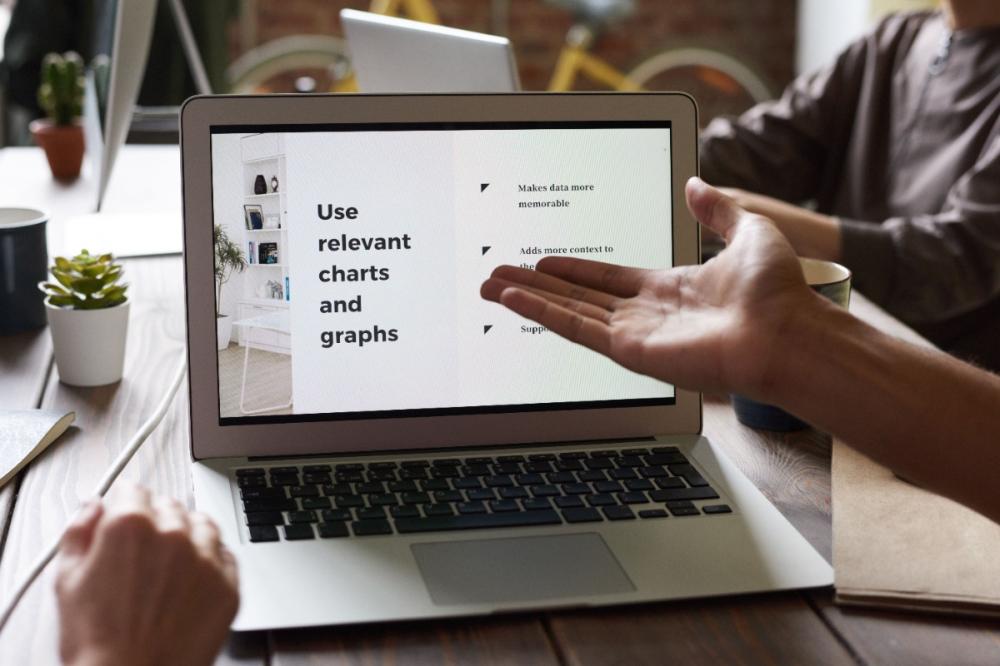
Image: fauxels on Pexels
Even simple techniques, such as pausing for questions or encouraging audience participation, can transform a passive lecture into a dynamic conversation. Remember, your slides are there to support you, not replace you. The real connection happens between speaker and audience.
No amount of design wizardry can compensate for a lack of preparation. Rehearse your presentation several times, ideally in front of a colleague who can provide constructive feedback. Pay attention to your timing, body language, and tone of voice. Aim to speak confidently and naturally, avoiding the temptation to read directly from your slides. The more familiar you are with your material, the more engaging and persuasive you’ll be on the day.
Finally, respect your audience’s time.
A succinct, focused presentation is far more effective than a marathon session that tries to cover too much. If you can deliver your key message in ten minutes, don’t stretch it to thirty. Leave time for questions and discussion; often, the best insights emerge when the formal presentation ends.
In summary, avoiding 'death by PowerPoint' is less about mastering software features and more about adopting a clear, audience-centred approach. Keep it simple, tell a story, engage your listeners, and practise diligently. In doing so, you’ll ensure your presentations are not just survived but also remembered and acted upon.

Ian Garner
Also by Ian Garner...
The New Reality Of Work, Knowing When It’s Time To Move OnThe Changing Face Of Remote Working, Insights From British BusinessesBreaking The Bias Barrier: How Business Leaders Can Recognise And Tackle Unconscious PrejudiceMeetings Vs Momentum: How Smart Organisations Get Work DoneWould Fewer Rules Be Better In The Workplace?The shortened address for this article is: newspub.uk/31ztl
Search Results